Guide
What Age Can You Drive a Jet Ski? Ages by State
Published
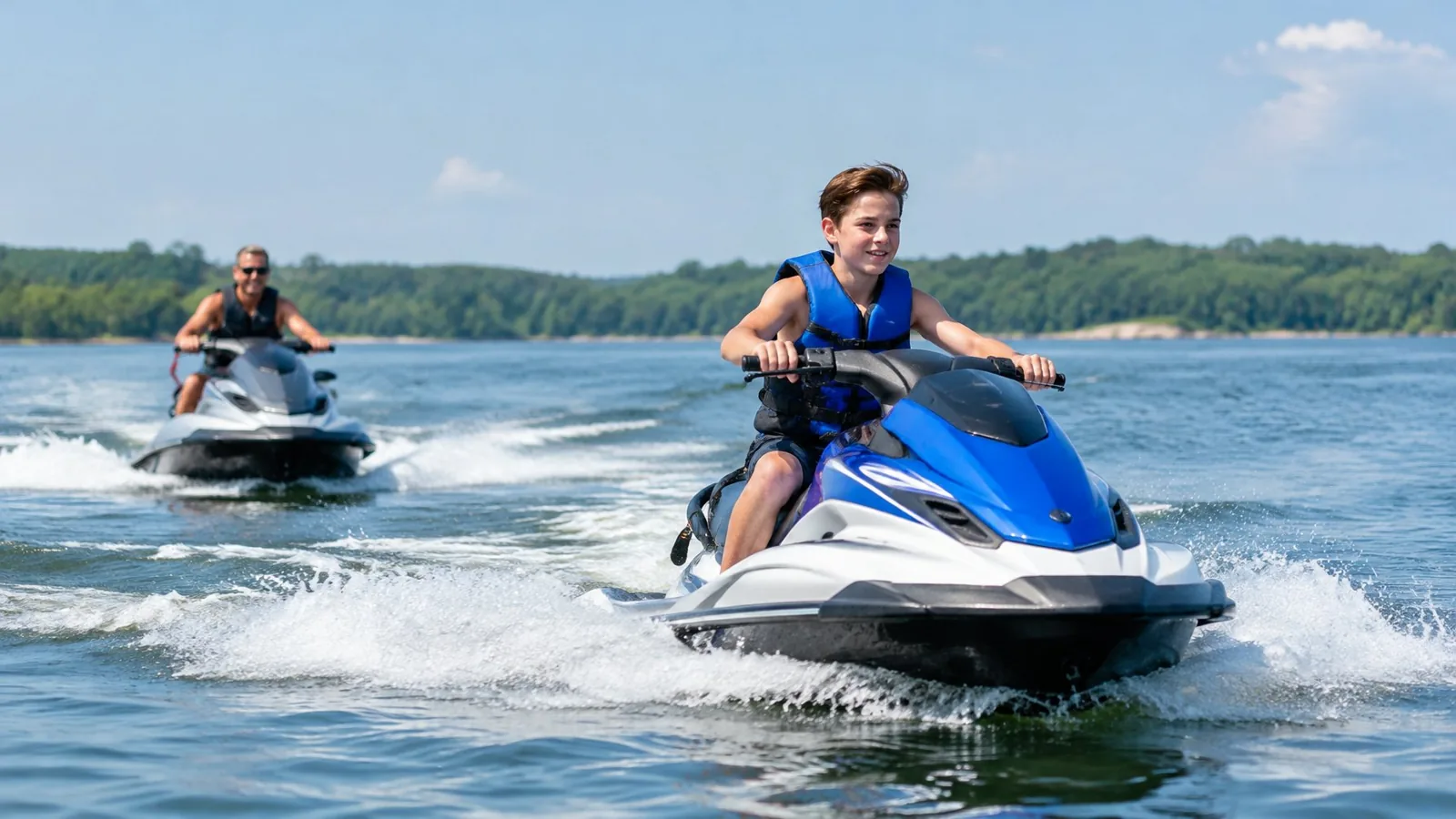
The age you can drive a jet ski depends on your state: many states let you ride alone at 16, Florida allows it from 14, and several states let riders 12 to 15 go out only with a certificate or an adult on board. A few states set no minimum age at all, so the general boating rule decides.
Your age alone may not settle the question. A state can set one age for riding independently and a lower age for riding with an adult, and rental businesses can have separate rules.
Key Takeaways
- A minimum age of 16 is common, while some states allow younger riders with conditions.
- Several states require an adult on board or nearby for younger PWC operators.
- Rental age rules differ from operating age rules.
The Short Answer
In many states, you must be 16 to ride a jet ski on your own, while Florida allows PWC operation from age 14 and Louisiana sets the minimum at 16.
Younger riders can qualify in some states when an adult supervises or when the rider meets a safety-course requirement. Check your state’s current rule before you ride, and review Do You Need a License to Drive a Jet Ski for information about education requirements.
Common Minimum Jet Ski Ages
A minimum age of 16 appears in many state PWC rules, while other states set lower ages or allow younger teens to ride with conditions. For example, Maine, Maryland, and Massachusetts require operators to be at least 16.
Some states set an operating minimum of 14. Nevada and New York require PWC operators to be at least 14, with New York also requiring a safe boating course.
A lower age does not always mean a teen may ride alone. Arkansas allows independent operation from age 16 if the operator meets the education rule; younger teens need an adult on board. Michigan allows some 14- and 15-year-olds to ride with a certificate and an adult nearby or aboard.
Which States Require Teens to Ride With an Adult?
Several states require an adult to be on board or nearby when a younger teen operates a PWC. The adult’s required age and the rider’s age vary by state.
In Arizona, a rider under 12 needs a parent, guardian, or person 18 or older on board. In Arkansas, riders under 12 need someone 21 or older on board, while riders ages 12 to 15 need someone 18 or older. Connecticut requires a PWC operator under 16 to have a certificate and an adult certificate holder 18 or older aboard.
In Delaware, 14- and 15-year-olds need a boating safety certificate and direct adult supervision on board. Iowa requires a responsible, experienced person at least 18 to be on board when a child under 12 operates a qualifying vessel.
Missouri allows a person under 14 to operate under direct, on-board supervision by a parent, guardian, or another person 16 or older. In Ohio, riders ages 12 to 15 need a supervising person 18 or older on board.
Oklahoma requires riders ages 12 to 15 to have the certificate plus an adult 18 or older on board or within 500 yards. Oregon lets you ride alone only at 16 or older with a card; otherwise a card-holder 18 or older must be on board.
In South Dakota, a rider under 14 needs someone 18 or older on board. Texas allows a child under 13 to operate a PWC with a qualified person 18 or older on board. In Utah, riders ages 12 to 15 need a course certificate and direct supervision by someone 18 or older.
West Virginia requires someone over 18 aboard when a rider ages 12 to 15 operates a PWC. In Wyoming, an operator under 16 needs an adult 18 or older aboard who is responsible for operating the PWC.
Some states use other supervision terms. Kansas requires direct and audible supervision for operators under 12. New Mexico requires an adult to supervise a child under 13 on board.
Which States Have No PWC-Specific Age?
Several states set a general boating rule without a separate minimum age for PWC operation. Their general rule still applies to your ride.
Alaska sets no minimum age to operate a boat. Idaho has no statewide minimum boat-operating age and requires operators to be competent and know navigation rules. In Mississippi, operators under 12 must be accompanied on board by someone 21 or older.
North Dakota requires someone 18 or older to accompany an operator under 12 who operates a motorboat over 10 horsepower. Rhode Island law leaves out an age floor for operators, but every PWC operator must pass an approved boating safety course. South Carolina sets no minimum operating age.
How Old Must You Be to Rent a Jet Ski?
Rental age limits vary by state, and some rental rules also require a certificate or other education step. Check the rental operator’s rules along with the state rule before booking.
Arkansas bars rental agencies from renting a PWC to anyone under 18. Florida requires renters to be at least 18. In Georgia, PWCs may not be rented to anyone under 16.
Idaho requires rental businesses to give each renter boater education and requires the operator to carry a verification wallet card. Montana requires renters of a PWC over 10 horsepower to be 18.
Nebraska bars boat liveries from renting a PWC to anyone under 18. In New York, PWC renters must be at least 16; renters under 18 need a certificate.
Oregon requires PWC renters to be 18. Pennsylvania bars anyone under 16 from operating a rented PWC. In Tennessee, anyone under 16 may not rent a PWC.
Washington bars PWC rentals to anyone under 16. West Virginia bars rental businesses from renting a PWC to anyone under 18. Wisconsin bars PWC rentals to anyone under 16.
State-by-State Jet Ski Age Rules
Your state’s rule sets the minimum age and any supervision or certificate conditions for riding. Use the table to check the rule for your state, then confirm the details before heading out.
| State | PWC operating age rule |
|---|---|
| Alabama | No one under 12 may operate a motorized vessel, including a PWC. PWC operators follow the same age and certification requirements as other vessel operators. |
| Alaska | No PWC-specific age; the general rule sets no minimum age to operate a boat. |
| Arizona | Children under 12 need a parent, guardian, or person 18 or older on board to operate a PWC. |
| Arkansas | Under 12: someone 21 or older must be on board. Ages 12 to 15: someone 18 or older must be on board. Ages 16 and up: independent operation if the education rule is met. |
| California | No one under 16 may operate a boat with a motor over 15 horsepower, including a PWC, subject to the stated exceptions for certain sailboats and dinghies. |
| Colorado | No one under 14 may operate a motorboat or PWC. Operators must be 18, or ages 14 to 17 with a boating safety certificate. |
| Connecticut | Under 16: a PWC certificate and an adult certificate holder 18 or older aboard are required. |
| Delaware | Ages 16 and up: independent operation. Ages 14 and 15: a boating safety certificate and direct adult supervision on board are required. |
| Florida | PWC operators must be at least 14. |
| Georgia | Ages 12 to 15 may operate a vessel under 16 feet, including a PWC, after a DNR-approved course or with a competent adult on board. Ages 16 and up may operate any vessel with proper ID and education. |
| Hawaii | No one under 15 may operate a thrill craft. |
| Idaho | No PWC-specific age; the general rule sets no statewide minimum age to operate a boat. Operators must be competent and know navigation rules. |
| Illinois | No one under 10 may operate a motorized vessel, including a PWC. PWC operators follow the same age and boating safety certificate rules as other motorboat operators. |
| Indiana | No one under 15 may operate a PWC. At 15 without a driver’s license, an operator needs an approved boater education course and a BMV-issued ID card on board. |
| Iowa | Under 12: a responsible person at least 18 and experienced in operating the vessel must be on board. |
| Kansas | No one under 12 may operate a motorized vessel, including a PWC, without direct and audible supervision. |
| Kentucky | Operators must be 12 or older to operate a motorboat, including a PWC, with 10 horsepower or more on public waters. |
| Louisiana | Operators must be 16 or older. |
| Maine | PWC operators must be at least 16. |
| Maryland | PWC operators must be at least 16. |
| Massachusetts | PWC operators must be at least 16, with no exceptions. |
| Michigan | No one under 14 may operate a PWC. Ages 14 and 15 need a certificate and a parent, guardian, or designated adult 21 or older aboard or within 100 feet. |
| Minnesota | Under 12: may not operate a PWC. |
| Mississippi | No PWC-specific age; operators under 12 must be accompanied on board by someone 21 or older. |
| Missouri | No one under 14 may operate a PWC unless under direct, on-board supervision by a parent, guardian, or other person 16 or older. |
| Montana | Children 12 and younger need someone 18 or older accompanying them to operate a PWC over 10 horsepower. Ages 13 and 14 need a safety certificate or an adult aboard. |
| Nebraska | Minimum operating age is 14. |
| Nevada | PWC operators must be at least 14. |
| New Hampshire | No one under 16 may operate a PWC under 13 feet, and the operator must hold a Safe Boater Education Certificate. |
| New Jersey | PWC operators must be at least 16. |
| New Mexico | No one under 13 may operate a motorboat, including a PWC, without an adult supervising on board. |
| New York | PWC operators must be at least 14 and complete a safe boating course. |
| North Carolina | No one under 14 may operate a PWC. Ages 14 and 15 need a boating safety card and proof of age, or an adult 18 or older who meets the education requirement on the PWC with them. |
| North Dakota | No PWC-specific age; the general rule requires someone 18 or older to accompany an operator under 12 on a motorboat over 10 horsepower. |
| Ohio | No one under 16 may operate a PWC, except ages 12 to 15 with a supervising person 18 or older on board. |
| Oklahoma | Under 12: may not operate a PWC. Ages 12 to 15 need a certificate and supervision by someone 18 or older, on board or within 500 yards. |
| Oregon | Independent operation requires age 16 or older and a card. A younger operator needs a card-holder 18 or older on board. |
| Pennsylvania | No one 11 or younger may operate a PWC. Ages 12 through 15 may not operate a PWC with a passenger 15 or younger on board. Every PWC operator must have a Boating Safety Education Certificate. |
| Rhode Island | The general rule leaves out an age floor for operators; check the state page for any PWC-specific age. Every PWC operator must pass an approved boating safety course. |
| South Carolina | No PWC-specific age; the general rule sets no minimum operating age. |
| South Dakota | No one under 14 may operate a PWC unless someone 18 or older is on board. |
| Tennessee | No PWC-specific age; general rule: under 12 may operate a boat over 8.5 hp only with a person 18 or older on board who can take control. Anyone under 16 may not rent a PWC. |
| Texas | Operators must be at least 13 and complete boater education, or be supervised on board by someone at least 18 who can lawfully operate the PWC. Children under 13 need a qualified person 18 or older on board. |
| Utah | Under 12: may not operate a PWC. Ages 12 to 15 need a course certificate and direct supervision by someone 18 or older. Ages 16 and 17 need the certificate. |
| Vermont | No one under 16 may operate a PWC, even with a certificate. |
| Virginia | No one under 14 may operate a PWC. Ages 14 and 15 need an approved boating safety course and must carry proof. |
| Washington | No one under 14 may operate a PWC. |
| West Virginia | Under 12: may not operate a PWC. Ages 12 to 15 need someone over 18 aboard. |
| Wisconsin | No one under 12 may operate a PWC. Operators ages 12 to 15 must hold a boating safety certificate. |
| Wyoming | Operators under 16 need an adult 18 or older aboard who is responsible for the PWC. |
Figures come from each state's official sources as recorded on our state pages. Rules change, so confirm with the official source linked on each state guide before you go.