Guide
Do You Need a License to Drive a Jet Ski? Rules in All 50 States
Published
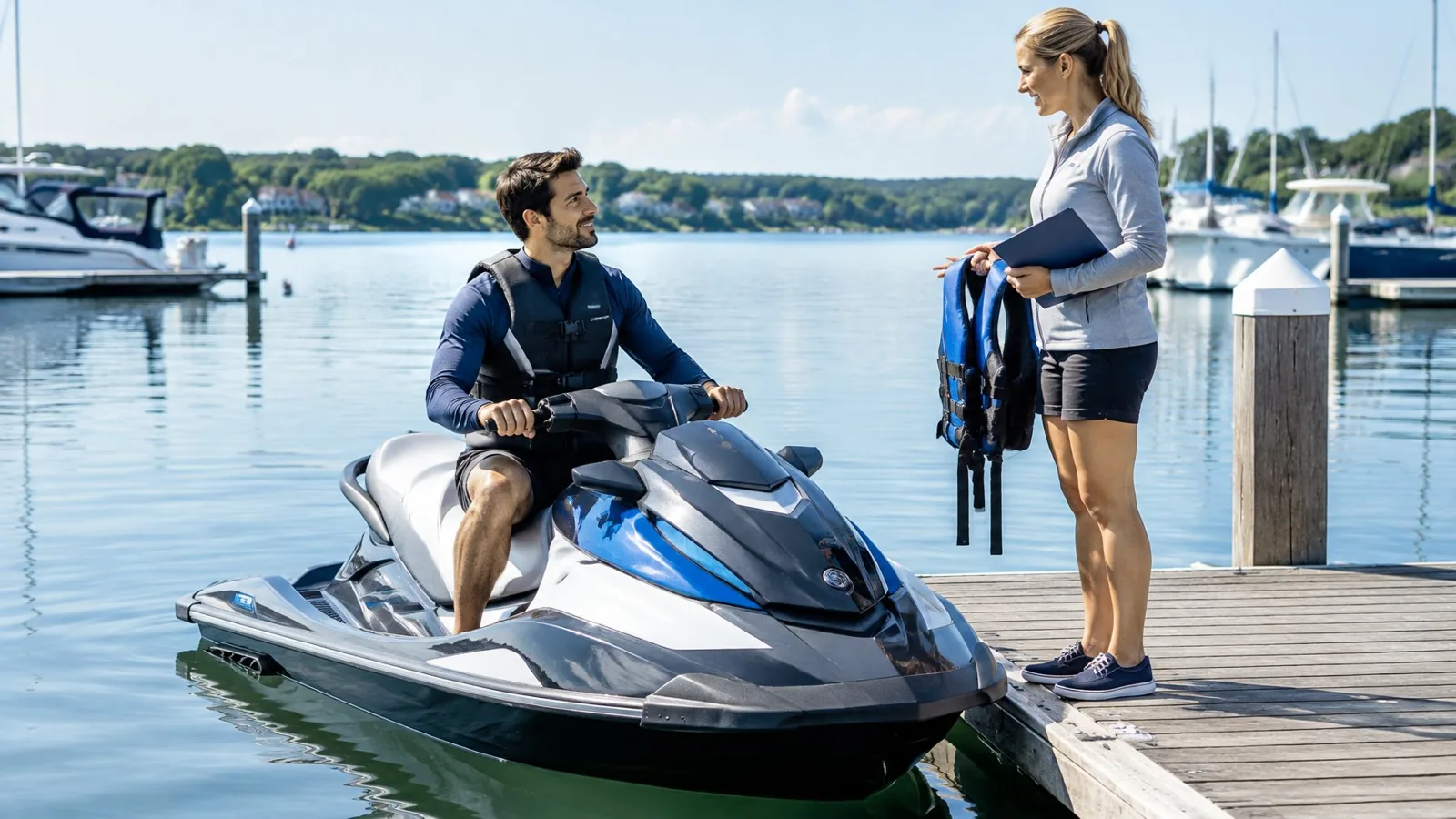
45 of 50 states require a boater education card for at least some jet ski riders. Only Alaska, Arizona, Idaho, South Dakota and Wyoming have no general education rule. A regular driver's license usually does not count, though Indiana accepts one.
A boater education card shows you passed an approved safety course. Whether you need one usually depends on your age or birth year, and a few states call it a license or certificate, so check what your state names it before you ride.
Key Takeaways
- 45 states require a boater education card for at least some jet ski riders.
- California, New York, Pennsylvania, Rhode Island and Virginia require a card for every jet ski operator.
- Most other states use a birth-date cutoff, so older riders are often exempt.
License vs. Boater Education Card
A jet ski operator usually needs a boater education card only when state law requires one; a regular driver’s license is a separate credential. States use different names for the course card, certificate, or permit.
In Alabama, the credential is called the Alabama Boater Safety Certification, or vessel operator’s license. In New Jersey, operating on non-tidal waters also requires an MVC power vessel operator’s license. Those are state boating credentials, not ordinary driver’s licenses.
Some states accept a driver’s license as an alternative to a boating credential in specific cases. For example, Indiana accepts a valid driver’s license as the operating credential; operators without one must meet the state’s education and identification-card rules.
Which States Require Every Operator to Carry a Card?
Several states require a boater education credential for every personal watercraft operator, with state-specific exemptions and conditions. The required document and who must have it vary.
- California requires a California Boater Card for all motorized boat operators, regardless of age.
- Hawaii requires a course certificate for power-driven vessel operators; personal watercraft operators need a separate thrill craft certificate.
- New Jersey requires a Boating Safety Certificate for power-vessel and personal watercraft operators, with some exceptions.
- New York requires a Safe Boating Certificate for all motorized boat operators, including personal watercraft operators.
- Oregon requires an education card for anyone operating a motorboat over 10 horsepower, including a personal watercraft.
- Pennsylvania requires a boating education certificate for all personal watercraft operators, and for operators born on or after January 1, 1982, running a boat over 25 horsepower.
- Rhode Island requires a boating safety certificate for every personal watercraft operator, regardless of birth date.
- Virginia requires a boating safety course certificate or card for all personal watercraft operators.
In Connecticut, covered residents, property owners, and operators of Connecticut-registered vessels need a Certificate of Personal Watercraft Operation to operate a personal watercraft. Check the state rule that applies to your residency and vessel.
Which States Use a Birth-Date Cutoff?
Many states require a card when your birth date falls on or after a set cutoff, though the covered boats and exemptions differ. A birth-date rule can apply to personal watercraft operators or to a wider group of motorboat operators.
| State | Who needs a card |
|---|---|
| Arkansas | Operators born on or after January 1, 1986, operating motorboats, including personal watercraft. |
| Delaware | Operators born on or after January 1, 1978, operating vessels that must be registered. |
| Florida | Operators born on or after January 1, 1988, operating a boat powered by 10 horsepower or more. |
| Georgia | Anyone born after January 1, 1998, operating a motorized vessel. |
| Illinois | Operators born on or after January 1, 1998, operating motorboats over 10 horsepower, including personal watercraft. |
| Louisiana | Operators born after January 1, 1984, operating motorboats over 10 horsepower or any personal watercraft. |
| Maine | Anyone born on or after January 1, 1999, operating any personal watercraft. |
| Maryland | Operators born on or after July 1, 1972, operating a motorized vessel. |
| Massachusetts | Motorboat and personal watercraft operators born after January 1, 1989, from April 1, 2026. Everyone else must have a certificate by April 1, 2028. |
| Michigan | Personal watercraft operators born after December 31, 1978, and motorboat operators born on or after July 1, 1996, running a boat over 6 horsepower. |
| Minnesota | Operators aged 12 and older who were born after June 30, 2000, operating a personal watercraft or motorboat over 25 horsepower. The cutoff moves to June 30, 1996, on July 1, 2027, and to June 30, 1987, on July 1, 2028. |
| Mississippi | Anyone born after June 30, 1980, operating a boat or personal watercraft on public waters, and proof must be carried while operating. |
| Missouri | Anyone born after January 1, 1984, operating on state lakes. A license with a boating safety endorsement also counts. |
| Nebraska | Anyone born after December 31, 1985, operating a motorboat or personal watercraft. |
| Nevada | Operators born on or after January 1, 1983, operating a boat over 15 horsepower on interstate waters. |
| New Mexico | Anyone born on or after January 1, 1989, operating a motor-propelled vessel or sailboat. |
| North Carolina | Operators born on or after January 1, 1988, operating a vessel with a motor of 10 horsepower or more. |
| Ohio | Operators born on or after January 1, 1982, operating a powercraft over 10 horsepower. |
| South Carolina | Operators born after July 1, 2007, operating a boat of 10 horsepower or more, a personal watercraft, or a specialty propcraft. |
| Tennessee | Anyone born after January 1, 1989, operating a motorized vessel over 8.5 horsepower. |
| Texas | Operators born on or after September 1, 1993, operating a personal watercraft, a motorboat over 15 horsepower, or a sailboat over 14 feet. |
| Vermont | Anyone born after January 1, 1974, operating a motorized vessel, including a personal watercraft. |
| Washington | Operators of boats with an engine of 15 horsepower or more, unless born before January 1, 1955. |
| West Virginia | Anyone born on or after December 31, 1986, operating a motorboat or personal watercraft. |
| Wisconsin | Motorboat and personal watercraft operators born on or after January 1, 1989. |
| Alabama | All operators of motorized vessels, including personal watercraft, need certification except those born before April 28, 1954. |
Which States Have Age-Based Rules?
In age-based states, the card requirement depends on your age or on the age and supervision of the person riding with you. Some states limit the requirement to young operators, while others set rules for all ages based on the craft’s power.
- Colorado requires operators aged 14 to 17 to have a safety certificate; operators 18 and older are exempt.
- Iowa requires operators 12 to 17 to have a certificate when operating a motorboat over 10 horsepower or a personal watercraft without a responsible, experienced adult on board.
- Kansas requires operators aged 12 through 20 to have a certificate, subject to its supervision exception; operators 21 and older are exempt.
- Kentucky requires operators 12 through 17 to have a certificate when operating a motorboat or personal watercraft with 10 horsepower or more.
- Montana requires operators aged 13 and 14 to have a safety certificate when operating a motorboat or personal watercraft powered by more than 10 horsepower, unless accompanied by someone 18 or older.
- North Dakota requires youth ages 12 through 15 to have an education card when operating a motorboat or personal watercraft with more than 10 horsepower without someone 18 or older along.
- Oklahoma requires operators aged 12, 13, 14 or 15 to have a safety certificate when operating a boat over 10 horsepower, a sailboat 16 feet or longer, or a personal watercraft.
- Utah requires personal watercraft operators aged 12 to 17 to have a boating safety certificate, regardless of residency.
- New Hampshire requires a certificate for everyone operating a motorized vessel over 25 horsepower. A person under 16 may operate one only with a certified adult aged 18 or older on board; personal watercraft operators must be at least 16 and hold the certificate.
Which States Have No Education Requirement?
Five states have no general mandatory boater education requirement, though some set separate rules for rentals or particular situations. A voluntary course can still help you learn local boating rules.
- Alaska has no mandatory boater education requirement; the state highly recommends an approved course.
- Arizona makes boater education voluntary.
- Idaho has no general requirement, though personal watercraft rental customers must complete the rental business’s education and carry a wallet card.
- South Dakota does not require boating education, though the state recommends certified online courses.
- Wyoming does not require a boating safety course.
What Is the Minimum Age to Operate a Jet Ski?
Minimum operating ages range from no statewide age limit to a set age for personal watercraft, and some states allow younger operators only with an adult or other qualified supervisor.
| State | Minimum operating age rule |
|---|---|
| Alabama | No one under 12 may operate any motorized vessel, including a PWC. |
| Alaska | Alaska's boating statutes (AS 05.25) set no minimum age to operate a boat. |
| Arizona | A person under 12 may not operate a vessel with a motor greater than 8 horsepower, including a PWC, unless there is an emergency, the child's parent or legal guardian is on board, or another person at least 18 is on board. |
| Arkansas | PWC: under 12 only with someone 21 or older on board who can take immediate control; 12 to 15 only with someone 18 or older on board; 16 and up on their own if they meet the education rule. |
| California | No one under 16 may operate a boat with a motor over 15 horsepower (including a PWC), except a sailboat up to 30 feet or a dinghy going between a moored boat and shore. |
| Colorado | No one under 14 may operate a motorboat or PWC. |
| Connecticut | Under 12: no motorboat over 10 hp unless they hold a certificate and are accompanied by someone 18 or older who holds a certificate. |
| Delaware | PWC: 16 and older on their own; 14 and 15 only with a boating safety certificate and under the direct supervision of an adult (statute: parent or guardian) on board. |
| Florida | No minimum age to operate a boat; personal watercraft operators must be at least 14, and renters at least 18. |
| Georgia | Under 12: may not operate a vessel 16 feet or longer, and may operate a vessel under 16 feet only if it is non-motorized or 30 hp or less with a competent adult on board. |
| Hawaii | Operators under 16 may run a power-driven vessel only with a certificate and a supervisor aboard who is 21 or older and also holds one. |
| Idaho | Idaho has no statewide minimum age to operate a boat; operators must be competent and know the navigation rules. |
| Illinois | No one under 10 may operate any motorized vessel, including a PWC. |
| Indiana | No one under 15 may operate a PWC or a motorboat over 10 horsepower. |
| Iowa | Under 12: may operate a vessel with a motor over 10 hp, including a PWC, only with a responsible person at least 18 and experienced in operating it on board. |
| Kansas | No one under 12 may operate a motorized vessel (including a PWC) without direct and audible supervision, even with a certificate. |
| Kentucky | A person must be 12 or older to operate a motorboat, including a PWC, with 10 horsepower or more on Kentucky public waters. |
| Louisiana | You must be 16 or older to operate a personal watercraft. |
| Maine | Under 12 may operate a motorboat of 10 hp or less alone; over 10 hp only with a supervisor 16+ aboard (who has the course if born on or after 1/1/1999). |
| Maryland | Anyone under 16 operating a motorized vessel 11 feet or longer without a certificate must be supervised by someone 18 or older who holds a certificate or was born before July 1, 1972; on motorized vessels under 11 feet, a certificate holder of any age may supervise. |
| Massachusetts | PWC operators must be at least 16, with no exceptions. |
| Michigan | Under 12: up to 6 hp with no restriction; over 6 hp to 35 hp only with a certificate on board and direct supervision by someone 16 or older; never over 35 hp. |
| Minnesota | Under 12: may not operate a personal watercraft or any motorboat over 75 horsepower; may operate a non-PWC motorboat under 75 horsepower only with an accompanying operator (21 or older, permit holder or exempt, within reach of the controls). |
| Mississippi | Operators under 12 must be accompanied on board by a person 21 or older. |
| Missouri | No one under 14 may operate a motorboat or PWC unless under the direct, on-board supervision of a parent, guardian or other person 16 or older. |
| Montana | Children 12 and younger may not operate a motorboat or PWC powered by more than 10 horsepower unless accompanied by someone 18 or older. |
| Nebraska | 14 for motorboats and personal watercraft; 16 to operate with a person in tow. |
| Nevada | PWC operators must be at least 14. |
| New Hampshire | 16 to obtain the certificate and to operate a 'ski craft' (PWC under 13 ft); under 16 may run a boat over 25 hp only with a certified adult 18+ aboard; no minimum age for 25 hp or less. |
| New Jersey | 13 with a certificate (electric-only or 12 ft+ under 10 hp only); 16 for unrestricted power vessels and for any PWC; 16 for the non-tidal operator's license. |
| New Mexico | No one under 13 may operate a motorboat unless an adult is on board supervising. |
| New York | Operators of motorized boats must be at least 10 and hold a boating safety certificate. |
| North Carolina | No minimum age for most boats. |
| North Dakota | Under 12: may operate a motorboat over 10 hp only when accompanied by someone 18 or older. |
| Ohio | Under 12: may operate a vessel only under the direct visual and audible supervision of someone 18 or older, and a powercraft over 10 hp only with that supervisor on board (holding a certificate if born on or after January 1, 1982). |
| Oklahoma | Under 12 may not operate a boat over 10 hp, a PWC or a sailboat 16 feet or longer. |
| Oregon | Children 11 and under may not operate a motorboat. |
| Pennsylvania | No one 11 or younger may operate a PWC or a boat over 25 hp. |
| Rhode Island | Every PWC operator needs a boating safety certificate, as does anyone born on or after January 1, 1986, running a boat over 10 hp. We could not confirm a separate minimum age. |
| South Carolina | State law sets no minimum operating age. |
| South Dakota | Under 12: may not operate a motorboat over 6 hp unless someone 18 or older is on board. |
| Tennessee | Under 12 may operate a boat over 8.5 hp only with a person 18 or older on board who can take control; that person must hold a certificate if born after January 1, 1989. |
| Texas | No one may operate a personal watercraft or a motorboat over 15 horsepower unless they are at least 13 and have completed boater education, or are supervised on board by someone at least 18 who can lawfully operate the boat. |
| Utah | Under 12 may not operate a PWC. |
| Vermont | No one under 12 may operate a vessel with a motor over 6 hp, and no one under 16 may operate a PWC, even with a certificate. |
| Virginia | No one under 14 may operate a personal watercraft. |
| Washington | No one under 12 may operate a boat with an engine of 15 hp or more unless accompanied and directly supervised by a card holder 16 or older. |
| West Virginia | Under 12: may not operate a motorboat or PWC. |
| Wisconsin | Under 10 may not operate a motorboat. |
| Wyoming | Under 16: may operate a numbered motorboat or PWC only when an adult (18 or older) is aboard and responsible for its operation. |
Before you launch, check your state’s current boating rules for your exact craft, age, and riding location. Keep any required card or certificate with you while operating, especially where the state says proof must be carried.
Figures come from each state's official sources as recorded on our state pages. Rules change, so confirm with the official source linked on each state guide before you go.