Guide
How Old Do You Have to Be to Drive a Boat? By State
Published
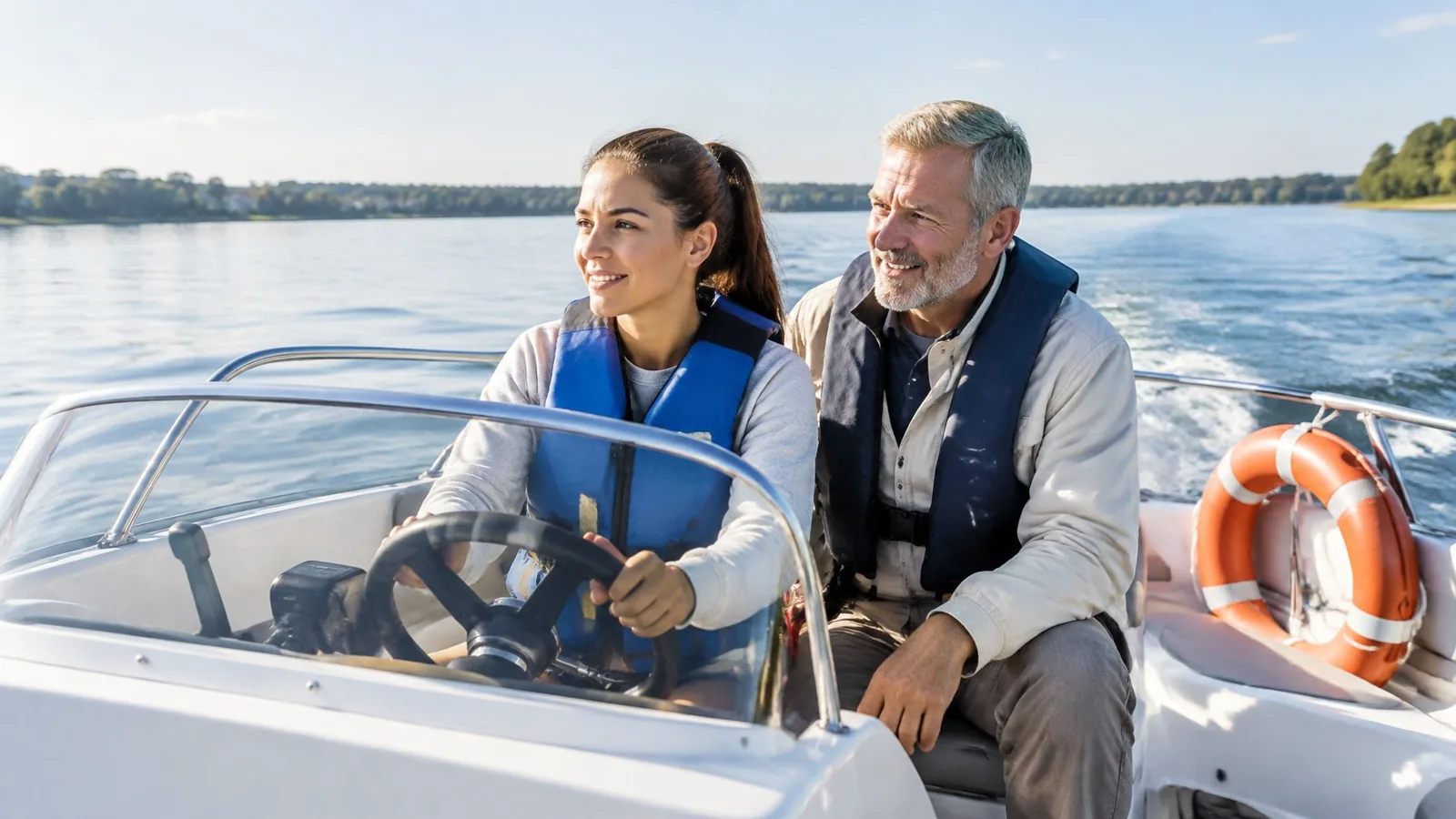
If you’re asking how old do you have to be to drive a boat, it depends on your state: there is no statewide minimum age in Alaska, no one under 14 may operate a motorboat or PWC in Colorado, and Texas requires operators of a PWC or motorboat over 15 horsepower to be at least 13 with boater education, or supervised on board by someone at least 18.
The age to drive a boat can also depend on the boat’s motor power, whether it is a personal watercraft (PWC), and whether you have a boating safety certificate or an adult supervising you. Check the rule for your state and the specific boat before you head out.
A PWC, including a jet ski, can have a higher minimum age than a motorboat. For more on those rules, see Do You Need a License to Drive a Jet Ski.
Key Takeaways
- State rules set different ages for different boats and motors.
- A course or adult supervision can affect when you may operate.
- Check your state’s rule for the exact boat you plan to use.
No Single National Driving Age for Boats
States set their own boat-operator age rules, and a state may set different limits for motorboats and PWCs. Some set no statewide minimum age for certain boats, while others require a minimum age, a course, adult supervision, or a combination.
Florida sets no minimum age to operate a boat, but PWC operators must be at least 14. Idaho has no statewide minimum age, though some counties set local age rules. In Delaware, no state minimum age is set for other motorboats, while PWC rules have specific age and supervision requirements.
A minimum age is only one part of the rule. For example, Rhode Island leaves out an age floor for operators, but requires a course for certain operators. Check your state’s official boating page for the rule that applies to your boat.
States With No Minimum Operating Age
Several states set no general minimum operating age for at least some types of boats, while still applying other limits. Those limits can include course requirements, supervision, or a separate minimum age for PWCs.
Mississippi sets no other state minimum age, but operators under 12 must be accompanied on board by a person 21 or older. North Carolina sets no minimum age for most boats, with separate PWC restrictions. South Carolina sets no minimum operating age, though operators born after July 1, 2007 must meet its certificate, rental safety certificate, or qualified-supervisor rule.
In Virginia, state law sets no general minimum age for other motorboats, while PWC operators must meet an age requirement. Before you go, check whether your state’s rule applies to the boat type, motor, or operator education status.
States That Set a Minimum Age
Many states set a minimum age for operating at least some motorboats or PWCs. The limit can apply to all powered boats or only to boats above a stated horsepower.
For example, Kentucky requires an operator to be 12 or older to operate a motorboat, including a PWC, with 10 horsepower or more on public waters. Oregon bars children 11 and under from operating a motorboat. In New York, motorized boat operators must be at least 10 and hold a boating safety certificate, while PWC operators must be at least 14.
These examples show why the minimum age for a motorboat may differ from the PWC age in the same state. Check the full rule for your state and boat in the table below.
Supervision Rules for Young Operators
Adult supervision lets some young people operate boats in states that set restrictions, but the required adult, location, and course rules differ. Some rules require an adult on board who can take control, while others allow operation after a course or with a certificate.
In Alabama, operators 12 or 13 with the certification may operate only with a licensed person 21 or older on board who can take immediate control. In Iowa, operators under 12 need a responsible person at least 18 and experienced in operating the boat on board to operate a vessel with a motor over 10 hp.
A course may also affect when you can operate without an adult. For example, Georgia allows operators ages 12 to 15 to operate a vessel under 16 feet after a DNR-approved course or with a competent adult on board. Read the state’s exact rule before relying on supervision or a certificate.
Horsepower Limits for Kids
Some states set different rules based on a boat’s horsepower, with tighter restrictions applying to more powerful motors. A child’s permitted age and supervision requirements can change at a stated horsepower threshold.
In Arizona, a person under 12 may not operate a vessel with a motor greater than 8 horsepower, including a PWC, unless an exception applies. In Michigan, children under 12 may operate up to 6 hp with no restriction; over 6 hp to 35 hp only with a certificate on board and direct supervision by someone 16 or older; never over 35 hp.
Check the motor’s horsepower and the state rule before letting a child operate. A rule for a small motor may not apply to a more powerful boat or to a PWC.
Minimum Age Rules by State
Use this state-by-state table to check the stated age, horsepower, course, and supervision rules. Where a state sets no general minimum age, other restrictions may still apply.
| State | Minimum age rule for operating a boat |
|---|---|
| Alabama | No one under 12 may operate any motorized vessel, including a PWC. Operators 12 or 13 with the certification may operate only with a licensed person 21 or older on board who can take immediate control. Operators 14 and older with the certification may operate alone. |
| Alaska | Alaska's boating statutes (AS 05.25) set no minimum age to operate a boat. |
| Arizona | A person under 12 may not operate a vessel with a motor greater than 8 horsepower, including a PWC, unless there is an emergency, the child's parent or legal guardian is on board, or another person at least 18 is on board. |
| Arkansas | PWC: under 12 only with someone 21 or older on board who can take immediate control; 12 to 15 only with someone 18 or older on board; 16 and up on their own if they meet the education rule. Motorboats of 10 hp or more: under 12 must have completed boater education and be under the direct supervision of a parent, guardian or person over 17. PWC rental agencies may not rent to anyone under 18. |
| California | No one under 16 may operate a boat with a motor over 15 horsepower (including a PWC), except a sailboat up to 30 feet or a dinghy going between a moored boat and shore. Children 12 to 15 may do so if supervised on board by a California Boater Card holder aged 18 or older. |
| Colorado | No one under 14 may operate a motorboat or PWC. Ages 14 to 17 may operate only after completing a state-approved boating safety course and must carry the certificate on board. Liveries may not rent a motorboat to anyone under 18 unless they are 14 to 17 and certified. |
| Connecticut | Under 12: no motorboat over 10 hp unless they hold a certificate and are accompanied by someone 18 or older who holds a certificate. Under 16: may operate a non-PWC motorboat without a certificate only under direct supervision of someone 18 or older who has held a certificate for at least 2 years; may operate a PWC only with a CPWO and a CPWO holder 18 or older aboard. Towing a water skier: operator must be 16 or older. |
| Delaware | PWC: 16 and older on their own; 14 and 15 only with a boating safety certificate and under the direct supervision of an adult (statute: parent or guardian) on board. No state minimum age is set for other motorboats, but anyone born on or after January 1, 1978 needs the certificate. |
| Florida | No minimum age to operate a boat; personal watercraft operators must be at least 14, and renters at least 18. |
| Georgia | Under 12: may not operate a vessel 16 feet or longer, and may operate a vessel under 16 feet only if it is non-motorized or 30 hp or less with a competent adult on board. Ages 12 to 15: may operate a vessel under 16 feet, including a PWC, only after a DNR-approved course or with a competent adult on board, and may not operate a vessel 16 feet or longer. 16 and older: may operate any vessel with proper ID and education. |
| Hawaii | Operators under 16 may run a power-driven vessel only with a certificate and a supervisor aboard who is 21 or older and also holds one. No one under 15 may operate a thrill craft. |
| Idaho | Idaho has no statewide minimum age to operate a boat; operators must be competent and know the navigation rules. Some counties, such as Benewah, Bonner and Kootenai, set local age rules. |
| Illinois | No one under 10 may operate any motorized vessel, including a PWC. Ages 10 and 11 may operate a motorboat over 10 hp only with direct supervision by a parent, guardian or designated person 18 or older. Ages 12 to 17 need a boating safety certificate or that same direct supervision. Supervisors born on or after January 1, 1998, must hold a certificate themselves. |
| Indiana | No one under 15 may operate a PWC or a motorboat over 10 horsepower. At 15 without a driver's license, a person may operate a motorboat or PWC only after completing an approved boater education course and with a BMV-issued ID card on board. Adults 21 or older without a driver's license may operate if issued a BMV ID card before January 1, 1996. |
| Iowa | Under 12: may operate a vessel with a motor over 10 hp, including a PWC, only with a responsible person at least 18 and experienced in operating it on board. Ages 12 to 17: must have the education certificate or have that adult on board. The certificate must be carried and shown to an officer on request. |
| Kansas | No one under 12 may operate a motorized vessel (including a PWC) without direct and audible supervision, even with a certificate. There is no minimum age for a sailboat if the operator has passed an approved course. |
| Kentucky | A person must be 12 or older to operate a motorboat, including a PWC, with 10 horsepower or more on Kentucky public waters. |
| Louisiana | You must be 16 or older to operate a personal watercraft. Children under 10 may take the course but cannot be certified. Operators born after January 1, 1984 without a card may run a motorboat over 10 hp only when accompanied by someone over 18 who has completed an approved course, if required. |
| Maine | Under 12 may operate a motorboat of 10 hp or less alone; over 10 hp only with a supervisor 16+ aboard (who has the course if born on or after 1/1/1999). Age 12+ with the course for over 25 hp. PWC operators must be at least 16. |
| Maryland | Anyone under 16 operating a motorized vessel 11 feet or longer without a certificate must be supervised by someone 18 or older who holds a certificate or was born before July 1, 1972; on motorized vessels under 11 feet, a certificate holder of any age may supervise. No one under 16 may operate a personal watercraft. |
| Massachusetts | PWC operators must be at least 16, with no exceptions. No one under 12 may operate a motorboat unless accompanied on board and directly supervised by a competent person 18 or older. A person over 12 without a certificate may operate a motorboat under the direct supervision of a certificate holder over 18. |
| Michigan | Under 12: up to 6 hp with no restriction; over 6 hp to 35 hp only with a certificate on board and direct supervision by someone 16 or older; never over 35 hp. PWC: no one under 14; ages 14 and 15 need a certificate and must ride with, or within 100 feet of, a parent, guardian or designated adult 21 or older. |
| Minnesota | Under 12: may not operate a personal watercraft or any motorboat over 75 horsepower; may operate a non-PWC motorboat under 75 horsepower only with an accompanying operator (21 or older, permit holder or exempt, within reach of the controls). Non-PWC boats of 25 horsepower or less need no permit at any age. |
| Mississippi | Operators under 12 must be accompanied on board by a person 21 or older. No other state minimum age is set. |
| Missouri | No one under 14 may operate a motorboat or PWC unless under the direct, on-board supervision of a parent, guardian or other person 16 or older. |
| Montana | Children 12 and younger may not operate a motorboat or PWC powered by more than 10 horsepower unless accompanied by someone 18 or older. Ages 13 and 14 need the safety certificate or proof of an approved course, or an adult 18+ aboard. You must be 18 to rent a motorboat or PWC over 10 horsepower. |
| Nebraska | 14 for motorboats and personal watercraft; 16 to operate with a person in tow. Boat liveries may not rent to anyone under 18, though a certified operator under 18 may run a boat rented by an adult. |
| Nevada | PWC operators must be at least 14. To operate a boat towing a skier or other device you must be at least 16, or 14 with a person 18 or older aboard in a position to supervise. |
| New Hampshire | 16 to obtain the certificate and to operate a 'ski craft' (PWC under 13 ft); under 16 may run a boat over 25 hp only with a certified adult 18+ aboard; no minimum age for 25 hp or less. |
| New Jersey | 13 with a certificate (electric-only or 12 ft+ under 10 hp only); 16 for unrestricted power vessels and for any PWC; 16 for the non-tidal operator's license. |
| New Mexico | No one under 13 may operate a motorboat unless an adult is on board supervising. |
| New York | Operators of motorized boats must be at least 10 and hold a boating safety certificate. Personal watercraft operators must be at least 14. Adults 18 and older may rent a motorboat or PWC from a livery without a certificate after basic instruction; renters under 18 need a certificate, and PWC renters must be 16 or older. |
| North Carolina | No minimum age for most boats. No one under 14 may operate a personal watercraft; 14- and 15-year-olds may only if they carry a boating safety card and proof of age, or an adult 18 or older who meets the education requirement is on the PWC with them. |
| North Dakota | Under 12: may operate a motorboat over 10 hp only when accompanied by someone 18 or older. Ages 12-15: need an adult 18+ along or a passed Boat North Dakota course. No restriction at 16 and older or for boats of 10 hp or less. |
| Ohio | Under 12: may operate a vessel only under the direct visual and audible supervision of someone 18 or older, and a powercraft over 10 hp only with that supervisor on board (holding a certificate if born on or after January 1, 1982). PWC: no one under 16, except ages 12 to 15 with a supervising person 18 or older on board. |
| Oklahoma | Under 12 may not operate a boat over 10 hp, a PWC or a sailboat 16 feet or longer. Ages 12 to 15 need the certificate plus supervision by someone 18 or older (on board, or within 500 yards for a PWC). All operators must carry the certificate or a photo ID showing they are 16 or older. |
| Oregon | Children 11 and under may not operate a motorboat. Ages 12 to 15 may run a boat over 10 hp only when accompanied by a card-holder 16 or older (18 or older for a PWC). A PWC may be operated unaccompanied only at 16 or older with a card. |
| Pennsylvania | No one 11 or younger may operate a PWC or a boat over 25 hp. Ages 12 through 15 may not operate a PWC with any passenger 15 or younger on board, and no one under 16 may operate a rented PWC. |
| Rhode Island | Rhode Island law leaves out an age floor for operators; the course requirement is the gate (anyone born on or after 1/1/1986 for over 10 hp, and all PWC operators). |
| South Carolina | State law sets no minimum operating age. Operators born after July 1, 2007 must hold a boating safety certificate or a valid boat rental safety certificate, or be accompanied by a qualified person at least 18 years old. |
| South Dakota | Under 12: may not operate a motorboat over 6 hp unless someone 18 or older is on board. Under 14: may not operate a PWC of any horsepower unless someone 18 or older is on board. |
| Tennessee | Under 12 may operate a boat over 8.5 hp only with a person 18 or older on board who can take control; that person must hold a certificate if born after January 1, 1989. Anyone under 16 may not rent a PWC. |
| Texas | No one may operate a personal watercraft or a motorboat over 15 horsepower unless they are at least 13 and have completed boater education, or are supervised on board by someone at least 18 who can lawfully operate the boat. |
| Utah | Under 12 may not operate a PWC. Ages 12 to 15 may operate a PWC only with the course certificate in hand and under the direct supervision of someone 18 or older; ages 16 and 17 need the certificate. Anyone under 16 may operate other motorboats only with someone 18 or older on board supervising. |
| Vermont | No one under 12 may operate a vessel with a motor over 6 hp, and no one under 16 may operate a PWC, even with a certificate. Students over 10 and under 12 must take a classroom course. |
| Virginia | No one under 14 may operate a personal watercraft. Operators 14 and 15 may operate a PWC only after completing an approved boating safety course and must carry proof. State law sets no general minimum age for other motorboats, but the education requirement still applies. |
| Washington | No one under 12 may operate a boat with an engine of 15 hp or more unless accompanied and directly supervised by a card holder 16 or older. No one under 14 may operate a personal watercraft. |
| West Virginia | Under 12: may not operate a motorboat or PWC. Ages 12-15: may operate a motorboat or PWC only with someone over 18 aboard, except a motorboat of 10 hp or less. Rental businesses may not rent a PWC to anyone under 18. |
| Wisconsin | Under 10 may not operate a motorboat. Ages 10 and 11 may only with a parent, guardian or designated adult 18 or older who holds a certificate or was born before 1989. Ages 12 to 15 need a certificate or that same adult supervision. No one under 12 may operate a PWC; ages 12 to 15 need a certificate (adult supervision is not a substitute), and no one under 16 may rent a PWC. |
| Wyoming | Under 16: may operate a numbered motorboat or PWC only when an adult (18 or older) is aboard and responsible for its operation. |
Figures come from each state's official sources as recorded on our state pages. Rules change, so confirm with the official source linked on each state guide before you go.