Guide
Do You Need to Register a Kayak? Rules by State
Published
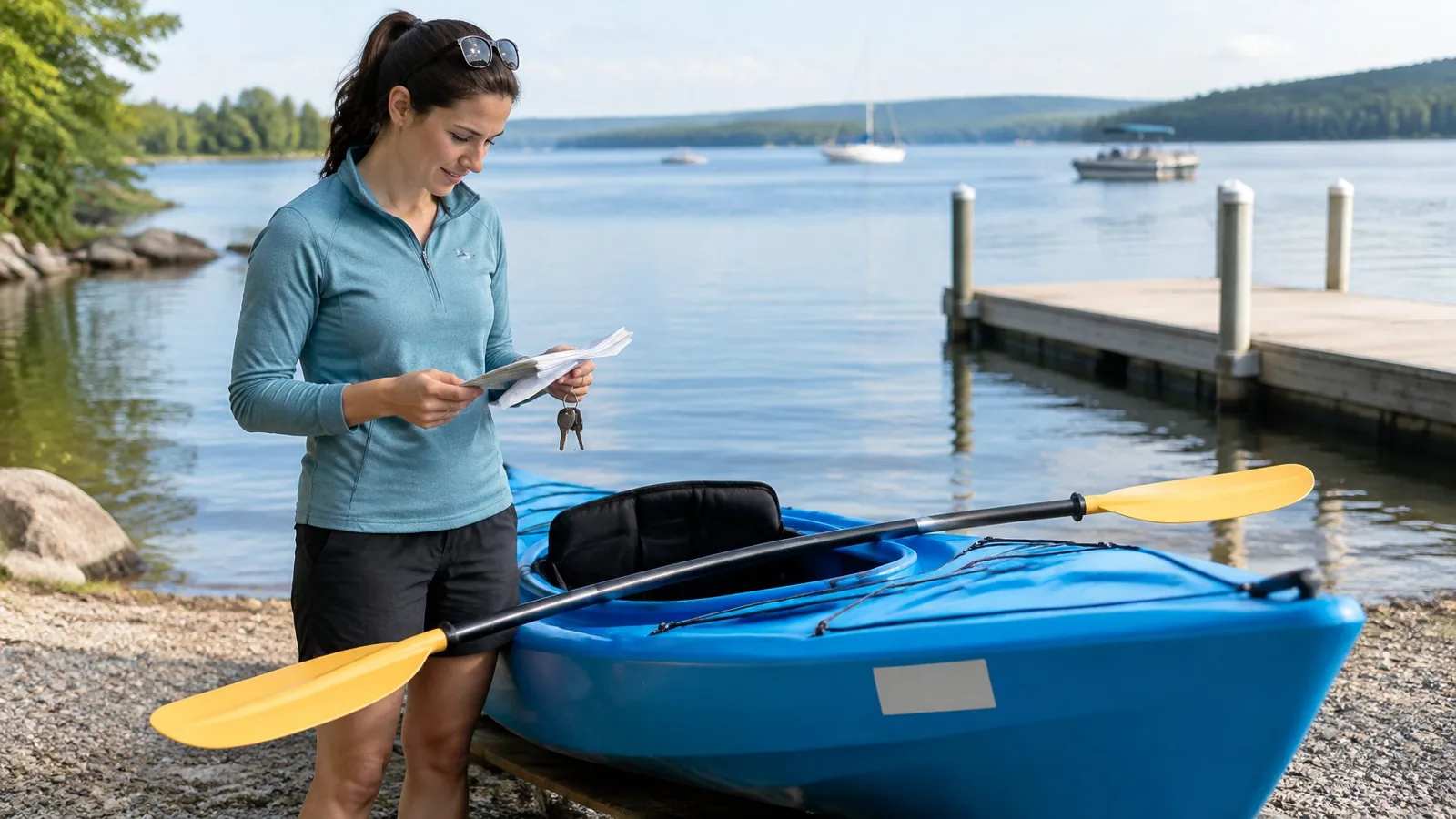
If you’re asking, “do you need to register a kayak,” you usually do not need to register an unpowered kayak: Florida exempts non-motorized kayaks of any length, while Minnesota requires registration for non-motorized boats over 10 feet.
Adding an electric trolling motor changes the rule in many states. Indiana and Virginia specifically require registration for motorboats with electric trolling motors.
You can use the state rules below to check whether your kayak needs registration, a permit, or a decal. If you plan to add a motor, check the rule for that setup before you launch.
Key Takeaways
- An unpowered kayak is exempt from registration in many states.
- Some states require registration for unpowered kayaks above a length limit.
- A motor or a separate access permit can add requirements.
The Short Answer for Paddlers
Your registration requirement comes from your state’s specific rule for unpowered boats, boat length, and motor use. Many states expressly exempt human-powered kayaks, while others apply a length limit or require a separate access permit.
Check your state’s rule before launching if you paddle across state lines or use a motor. A kayak’s registration status in one state does not settle its requirements in another.
Which States Exempt Unpowered Kayaks?
Several state rules expressly exempt unpowered kayaks or other manually propelled boats from registration. Those states include Florida, Georgia, Hawaii, Idaho, Illinois, Indiana, Massachusetts, Michigan, Missouri, Montana, Nevada, New Hampshire, New York, North Carolina, North Dakota, Oklahoma, Pennsylvania, South Carolina, Tennessee, Texas, Utah, Vermont, Washington, West Virginia, and Wisconsin.
Length and use conditions still apply in some of these states. For example, Iowa exempts canoes and kayaks 13 feet or shorter when they have no motor or sail. Check the state rule for the details that apply to your boat.
Where Are Some Unpowered Kayaks or Canoes Registered?
Unpowered kayaks or canoes fall under registration rules in some states when they exceed a length limit or are included in a broader watercraft rule. Minnesota requires registration for non-motorized boats over 10 feet, including kayaks and canoes; Iowa exempts canoes and kayaks 13 feet or shorter when they have no motor or sail.
South Dakota registers non-motorized boats over 12 feet and exempts those 12 feet or less. Ohio names kayaks and canoes among the watercraft that require registration unless exempt. If you are unsure whether your kayak fits an exception, check the state’s rule before you use it.
What Changes When You Add a Trolling or Electric Motor?
Adding a motor triggers registration in states that require motorized boats to be registered, and some rules explicitly include electric motors. Arkansas includes trolling motors, while Arizona and Connecticut expressly cover electric motors.
Other state rules name electric trolling motors or any electric motor. These include Kansas, New York, North Dakota, South Dakota, and Wisconsin. Check your state’s rule for the motor type and boat setup you plan to use.
What Decals or Permits Might Paddlers Still Need?
A kayak can be exempt from registration and still need a decal, permit, or launch pass. Maryland offers an optional $12 decal for owners of non-motorized boats.
Oregon requires a Waterway Access Permit for non-motorized boats. In Pennsylvania, an unpowered boat must be registered or display a launch permit to use Fish and Boat Commission or DCNR state park and state forest accesses.
Separate aquatic invasive species rules apply in some places. Nevada requires an AIS decal on watercraft that can hold water, including kayaks; Wyoming requires an annual AIS decal for almost all watercraft.
Which State Rules Should You Check Directly?
Check the state page for every state where you plan to paddle, especially if its rule does not specifically address unpowered kayaks. Rules can also include conditions for visitors, public waters, private ponds, or boat length.
The state rules here focus on registration and the decals or permits named in those rules. For operator education or license requirements, check your state’s boating page separately.
State-by-State Kayak Rules
Use this table to find the rule that fits your kayak, canoe, or motor. “Check state page” means the state rule does not clearly say whether an unpowered kayak is exempt.
| State | Unpowered kayak or canoe | Motor or other rule |
|---|---|---|
| Alabama | Check state page; the rule covers every vessel, with a farm-pond exception. | Every vessel must be registered and numbered, except vessels 12 feet or less used solely on farm ponds under 50 acres. |
| Alaska | Check state page. | Boats with mechanical propulsion, including electric motors, and boats used in sport fishing charters must be registered and numbered. The Certificate of Number must be aboard and decals displayed. |
| Arizona | Non-motorized vessels are exempt. | Every motorized watercraft, including those with electric motors, must be registered to operate, moor, or anchor on state waters. Out-of-state vessels are exempt for 90 or fewer consecutive days. |
| Arkansas | Check state page. | Boats propelled by sail or any motor, including trolling motors, must be registered. |
| California | Check state page. | All boats with a motor of any size and sailboats over 8 feet long must be registered, including on private lakes. |
| Colorado | Check state page. | Colorado residents must register motorized and sail-powered boats. |
| Connecticut | Unregistered vessels and paddlecraft must display owner contact information. | All motorboats, including those with electric motors, and sailboats 19.5 feet or longer must be registered. |
| Delaware | Check state page. | Every motorboat, including electric-powered boats, whose state of principal use is Delaware must be registered. |
| Florida | Non-motorized kayaks and canoes are exempt at any length. | Other boats must be registered, with an exception for non-motorized boats under 16 feet. |
| Georgia | Non-motorized canoes, kayaks, rowboats, and rafts are exempt. | Mechanically propelled vessels and sailboats over 12 feet must be registered. |
| Hawaii | Manually propelled boats are exempt. | Exceptions also include sailboats 8 feet or shorter propelled only by sail, out-of-state vessels in state waters 60 days or less, and motorized vessels under 5 hp. |
| Idaho | Manually propelled boats such as canoes, rafts, and kayaks are exempt. | Out-of-state motorized boats need a $30 invasive species sticker; non-motorized boats need a $7 sticker. |
| Illinois | Non-powered vessels such as canoes, kayaks, and paddleboards are exempt. | Other exceptions include government vessels, lifeboats, and racing-only boats. |
| Indiana | Non-motorized vessels are exempt. | Boats with electric trolling motors must be registered. |
| Iowa | Canoes, kayaks, and paddleboards 13 feet or shorter with no motor or sail are exempt. | All vessels used on public waters must be registered unless an exception applies. |
| Kansas | Check state page. | Vessels powered by a gasoline, diesel, or electric motor, or by sail, must be registered. |
| Kentucky | Check state page. | Mechanically powered vessels used primarily in the state must be registered. |
| Louisiana | Check state page. | Motorized vessels and sailboats 12 feet or longer used on state waters must be registered. |
| Maine | Check state page. | Motorboats with any motor and personal watercraft used on state waters must be registered. |
| Maryland | Owners of non-motorized boats may buy an optional $12 decal. | The optional decal is for canoes, kayaks and other non-motorized boats. |
| Massachusetts | Unpowered canoes, sailboats, and dinghies are exempt. | Other exceptions include boats registered in another state and used in Massachusetts waters for 60 or fewer consecutive days. |
| Michigan | Privately owned non-motorized canoes and kayaks are exempt. | All boats with a motor, including electric and inflatable boats, must be registered. Privately owned rowboats 16 feet or less are exempt. |
| Minnesota | Non-motorized boats over 10 feet, including canoes, kayaks, and paddleboards, must be registered. | All motorized boats must be registered regardless of length. |
| Mississippi | Check state page. | Sailboats and every undocumented vessel with propulsion machinery must be registered, even if the motor is not the main source of power. |
| Missouri | Non-motorized vessels are exempt. | Sailboats 12 feet or less and boats registered in other states using Missouri waters for 60 consecutive days or less are also exempt. |
| Montana | Manually propelled boats are exempt. | Motorboats, personal watercraft, and sailboats 12 feet or longer must be titled and permanently registered. Validation decals are no longer required. |
| Nebraska | Check state page. | Vessels powered by any mechanical device on public or private waters must be registered. |
| Nevada | Non-motorized vessels, including canoes and kayaks, are exempt from registration. | Watercraft that can hold water, including kayaks, must display a Nevada AIS decal. Float tubes, paddleboards, inner tubes, and water toys are exempt from the decal. |
| New Hampshire | Canoes, kayaks, and other small non-motorized craft are exempt. | Motorboats of any size, including electric, and sailboats or sailboards 12 feet or longer must be registered. |
| New Jersey | Check state page; the rule covers every vessel unless an exception applies. | Every vessel on state waters must be numbered unless exempt. |
| New Mexico | Check state page. | Boats propelled by machinery and sailboats, except sailboards and windsurf boards, need a registration card and validation decal. Registration is renewed every three years through December 31 of the third year. |
| New York | Boats without a motor do not need to be registered. | Every boat with an electric or fuel-driven motor must be registered, regardless of boat or motor size. |
| North Carolina | Paddled, rowed, or drifting craft are exempt. | Boats used only on a private pond are also exempt. |
| North Dakota | Non-motorized boats do not need registration, though they may be registered voluntarily. | Motorboats powered by any motor, including electric motors, must be registered. |
| Ohio | Kayaks and canoes are included in the registration rule unless exempt. | Registration is valid for three years. Non-powered watercraft pay a $5 waterways conservation assessment; agents add a $3 writing fee. |
| Oklahoma | Human-powered canoes, kayaks, and paddleboats are exempt. | Motorized vessels, including canoes and kayaks, must be registered. |
| Oregon | Non-motorized boats need a Waterway Access Permit. | Out-of-state boaters need a $30 nonresident AIS permit. |
| Pennsylvania | Unpowered boats do not have to be registered. | To use Fish and Boat Commission or DCNR state park and state forest accesses, unpowered boats must be registered or display a launch permit. |
| Rhode Island | Check state page. | Motorboats and personal watercraft, plus sailboats, rowboats 12 feet or longer, and motorized canoes or kayaks, used on state waters are covered. |
| South Carolina | Watercraft propelled only by human power or paddles are exempt. | Other watercraft must be registered and titled, with exceptions for documented vessels and windsurfers. |
| South Dakota | Non-motorized boats 12 feet or less are exempt. | Motorboats of any length, including those with electric trolling motors, and non-motorized boats over 12 feet must be registered each year. Motorboats and boats over 12 feet also need a title, with some exceptions. |
| Tennessee | Boats powered only by oars or paddles are exempt. | Mechanically powered vessels, including those with electric trolling motors, and sailboats principally used in the state must be registered. |
| Texas | Paddled, poled, oared, or windblown canoes, kayaks, rowboats, and rafts are exempt unless a motor is added. | Motorized boats of any length, sailboats with an auxiliary engine, non-motorized boats 14 feet or longer, and USCG-documented vessels are covered by the rule. |
| Utah | Canoes, kayaks, and other boats without a motor or sail are exempt. | Motorboats and sailboats must be registered and display current registration and AIS decals. |
| Vermont | Non-motorized vessels are exempt. | Vessels propelled by a motor on public waters must be registered. Boats registered elsewhere and used in Vermont for 60+ days a year need a Vermont validation sticker. |
| Virginia | Check state page. | Every motorboat on public waters, including canoes and kayaks with any motor, even an electric trolling motor, must be registered. |
| Washington | Boats propelled only by hand, including canoes and kayaks, are exempt. | Boats under 16 feet with a motor of 10 hp or less used only on non-federal waters are exempt. |
| West Virginia | Boats without a motor need no title or registration. | Motors under 3 hp, or electric motors under 70 pounds of thrust, must be registered but pay no fee. |
| Wisconsin | Non-motorized boats other than sailboats are exempt. | Motorized boats, including those with electric trolling motors, and sailboats over 12 feet must be registered. |
| Wyoming | Check state page; almost all watercraft must display an annual AIS decal. | Motorboats powered by any propulsion machinery, including electric trolling motors, must be registered. Registration is available for 1-year or 3-year periods. |
Figures come from each state's official sources as recorded on our state pages. Rules change, so confirm with the official source linked on each state guide before you go.