Guide
Boating License Reciprocity: Taking Your Boat Out of State
Published
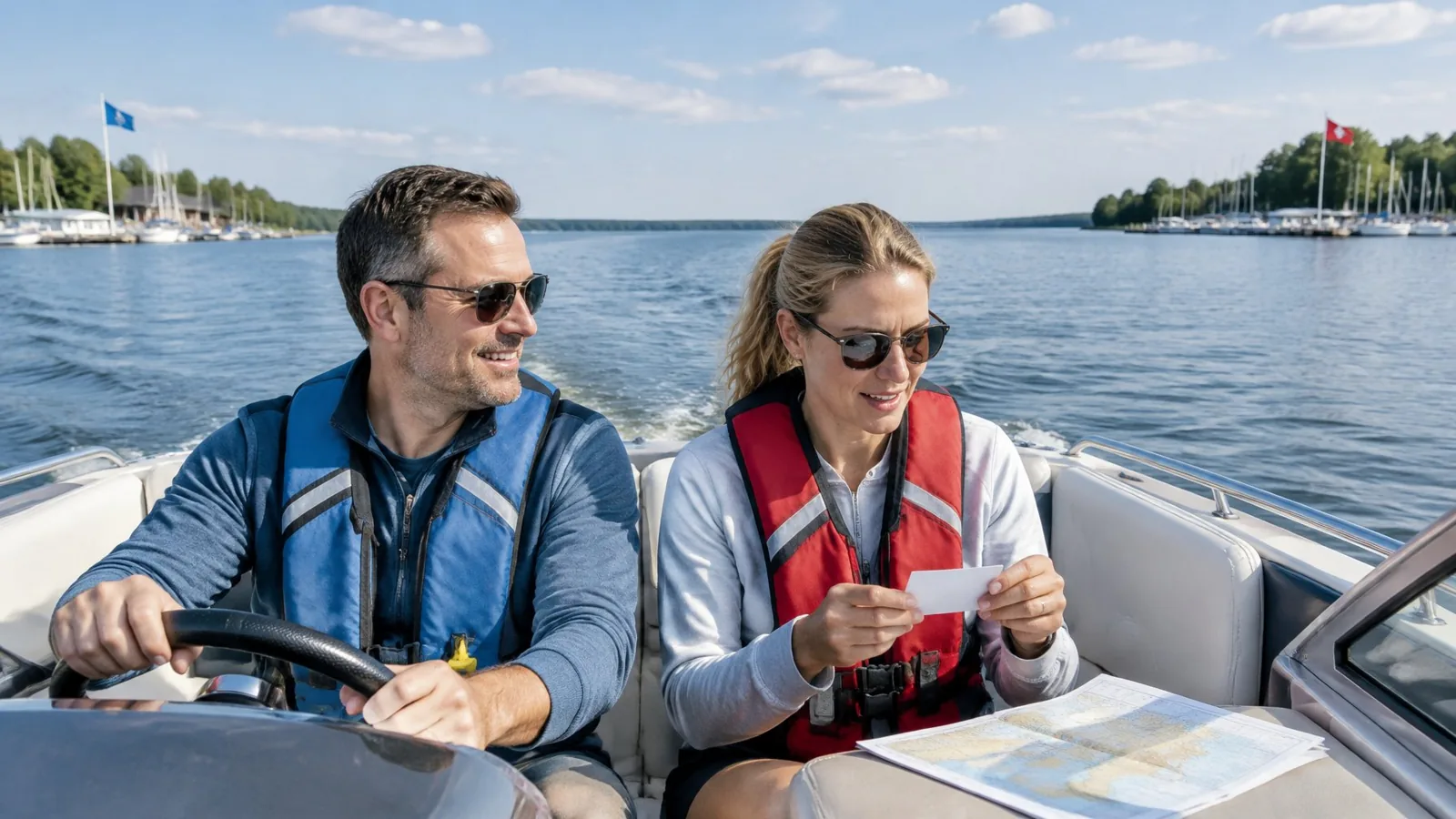
In most states, boating license reciprocity lets you use a boater education card from a NASBLA-approved course taken in another state; Delaware accepts a NASBLA-approved certificate from any state. A boat registered elsewhere may use New Hampshire waters for up to 30 consecutive days and Montana waters for up to 90 consecutive days.
Your card and your boat registration follow separate rules. Check both before you launch, especially if you plan to stay beyond a visitor window or your state has a special rule for residents.
Key Takeaways
- A NASBLA-approved course card works in many states, with exceptions for residents and certain activities.
- Temporary-use windows for out-of-state boats range from 30 to 180 consecutive days where a limit is stated.
- Some states require a separate invasive-species sticker or decal for visiting boats.
The Short Answer for Traveling Boaters
Your card will work in many states when it comes from a NASBLA-approved course, while some states accept a wider range of certificates or set their own conditions. Alaska, South Dakota, and Wyoming do not require an education card for general boating, so visitors do not need one there.
Treat your education card and boat registration as separate checks. A state may accept your card while setting a different time limit for your out-of-state boat, and some states do not set out a visitor boat window.
Will Your Boater Card Work in Another State?
A card from a NASBLA-approved course is accepted by many states, though each state sets its own conditions. Carry your card or proof of completion on board; Arkansas specifically requires proof of certification to be carried there.
Some states recognize certificates from a broader range of sources. Illinois recognizes certificates from other states and certain boating organizations, while Massachusetts accepts certificates from U.S. states or territories and Transport Canada for visiting nonresidents.
A state may have no general education-card requirement, or its rules may apply only to certain operators or activities. Check the state’s boating page before relying on a card for a trip, especially if the state does not spell out how it treats out-of-state certificates.
States With Extra Conditions for Visitors
Some states add a residence, activity, or time limit to card reciprocity. California exempts visiting residents from its card rule when they boat there for less than 60 days and meet their home-state requirements; California residents must get a California card even if they hold another state’s card.
Hawaii accepts a NASBLA-approved course toward its requirement, with a Hawaii-specific portion still required. Its reciprocity does not cover thrill craft or tow-in surfing credentials.
Oregon requires visitors to hold an Oregon card or a card from a state that issues cards for NASBLA-approved courses. Washington boaters who are not required to hold a card at home must take a Washington or Oregon course to boat in Oregon.
New Jersey allows visitors to use a home-state certificate or approved course proof for under 90 days. New residents must complete an approved New Jersey course. Tennessee accepts a NASBLA-approved certificate for out-of-state boaters born after January 1, 1989.
How Long a Visiting Boat Can Stay
Where a state sets a visitor window, the limit ranges from 30 to 180 consecutive days. New Hampshire allows up to 30 consecutive days, while New Jersey allows boats numbered in another state to remain for up to 180 consecutive days.
Many states set a 60-day limit. Georgia allows qualifying out-of-state boats for up to 60 days, while Rhode Island allows them to use its waters for up to 90 days. The exact rule may use consecutive days, days in a year, or another stated measure, so check the wording for your destination.
Some states do not set out a visitor boat window. Use the state-by-state table to spot those entries, then check the state page for the rule that applies to your trip.
When You Must Register in the New State
You must register your boat when the visitor exemption ends or when the state’s stated registration rule applies. For example, Delaware requires nonresident boats used or kept in its waters for more than 60 days to register, while South Dakota requires registration after 60 days.
Registration rules can also cover specific boat types. Wisconsin requires registration for all motorized boats, including boats with electric trolling motors, and for boats registered elsewhere that stay there more than 60 consecutive days.
Some states charge visiting boats for invasive-species prevention. Maine requires out-of-state registered boats on its internal waters for under 60 consecutive days to buy a Lake and River Protection Sticker. North Dakota requires an out-of-state motorized boat to have a $15 aquatic nuisance species sticker each calendar year, and Utah requires visiting boats to have a nonresident AIS decal.
State-by-State Reciprocity Table
The table separates card rules from out-of-state boat windows. “Check state page” marks a state whose visiting-boat window is not set out here.
| State | Out-of-state card rule | Out-of-state boat rule |
|---|---|---|
| Alabama | Nonresidents may use a valid home-state or country certification issued since October 1, 2024, or obtain a Nonresident Alabama Boater Safety Certification. | Check state page. |
| Alaska | No boating license or card is required for general operation. | Up to 90 consecutive days without Alaska registration. |
| Arizona | No mandatory boater education requirement. | Registered elsewhere: 90 or fewer consecutive days. |
| Arkansas | Accepts another state’s certificate from a NASBLA-approved course; carry proof on board. | Registered elsewhere: 90 or fewer consecutive days. |
| California | Visiting residents are exempt for less than 60 days if they meet home-state rules; California residents need a California card. | Check state page. |
| Colorado | State law requires a Division-approved course for operators 14 to 17; treatment of out-of-state cards is not specified. | Up to 60 days on home-state registration. |
| Connecticut | Accepts certificates from Massachusetts, New Hampshire, New York, and Rhode Island; agreements are being revised. | Check state page. |
| Delaware | Accepts a NASBLA-approved certificate issued by any state. | Register if used or kept in Delaware waters more than 60 days. |
| Florida | Nonresidents are exempt with proof of a NASBLA-approved course or equivalency exam from another state. | Check state page. |
| Georgia | Nonresidents who completed a NASBLA-approved course are exempt. | Out-of-state boats: up to 60 days. |
| Hawaii | Another state’s NASBLA-approved course counts toward the requirement; complete the Hawaii-specific portion. | 60 days or less. |
| Idaho | No boating license or education card is required for general operation. | Up to 60 consecutive days. |
| Illinois | Recognizes certificates from another state, a Canadian province, the U.S. Coast Guard Auxiliary, and the U.S. Power Squadrons. | Under 60 consecutive days. |
| Indiana | Handbook does not state whether other states’ cards are accepted. | 60 consecutive days or less. |
| Iowa | Out-of-state card acceptance is not specified; out-of-state teens should check with the DNR. | 60 or fewer days a year. |
| Kansas | Accepts a card from another state if it comes from a NASBLA-approved course. | Up to 60 consecutive days. |
| Kentucky | Accepts a certificate showing completion of any NASBLA-approved course. | Up to 60 consecutive days. |
| Louisiana | Course requirement is NASBLA-approved; renter credentials and U.S. Coast Guard licensed captains have stated exemptions. | 90 or fewer consecutive days. |
| Maine | Accepts all NASBLA-approved boater safety and education certificates. | Under 60 consecutive days on internal waters; Lake and River Protection Sticker required. |
| Maryland | Another state’s certificate is valid if it meets NASBLA criteria. | Check state page. |
| Massachusetts | Visiting nonresidents may use a valid certificate from any U.S. state or territory or Transport Canada. | 60 or fewer consecutive days. |
| Michigan | State summary does not specify treatment of other states’ cards. | 60 days or less. |
| Minnesota | Visitors using state waters for no more than 60 days are exempt if they meet home-state or country rules. | Check state page. |
| Mississippi | Out-of-state card acceptance is not specified; check with the state before relying on a card. | Check state page. |
| Missouri | For PWC operation, accepts a NASBLA-approved card issued by Missouri Highway Patrol or another state. | 60 consecutive days or less. |
| Montana | Accepts evidence of completing another state’s or organization’s NASBLA-approved course. | Up to 90 consecutive days. |
| Nebraska | Nonresidents who passed a NASBLA-approved course recognized by another state may operate a motorboat. | Less than 60 consecutive days. |
| Nevada | Renters must meet their home-state requirements; other out-of-state card treatment is not specified. | 90 or fewer consecutive days. |
| New Hampshire | Accepts NASBLA-approved certificates from another state and several other credentials. | 30 or fewer consecutive days. |
| New Jersey | Visitors may use a home-state certificate or approved course proof for under 90 days; new residents must take an approved New Jersey course. | Up to 180 consecutive days. |
| New Mexico | Nonresidents with a valid card from another state are exempt; new residents have 45 days to get a New Mexico card. | Up to 90 days. |
| New York | Recognizes a NASBLA-approved certificate issued by the current state of residence. | No more than 90 consecutive days. |
| North Carolina | Visitors using state waters for no more than 90 days are exempt if they meet home-state or country rules. | Check state page. |
| North Dakota | State pages do not specify whether other states’ cards are accepted for ages 12-15. | 90 days; out-of-state motorized boats need a $15 aquatic nuisance species sticker each calendar year. |
| Ohio | Accepts a NASBLA-approved course or a proficiency exam based on that curriculum; certificate must be shown within 72 hours if stopped. | Check state page. |
| Oklahoma | Nonresidents who completed another state’s approved course or equivalency exam are exempt. | 60 days or less. |
| Oregon | Visitors need an Oregon card or a card from a state that issues cards for NASBLA-approved courses. | Check state page. |
| Pennsylvania | Requires a certificate from a NASBLA-approved course; permanent certificate fee is $10 and the card is good for life. | Check state page. |
| Rhode Island | Accepts a certificate from any NASBLA-approved course; nonresidents may follow home-state rules. | Up to 90 days. |
| South Carolina | Nonresidents with another state’s boating safety certificate or equivalency are exempt; accepts NASBLA-approved courses. | Check state page. |
| South Dakota | No education card is required. | 60 days before South Dakota registration is required. |
| Tennessee | Out-of-state boaters born after January 1, 1989 may use any NASBLA-approved certificate. | Check state page. |
| Texas | Accepts another state’s course if NASBLA-approved; a U.S. Coast Guard vessel operator’s license also qualifies. | Check state page. |
| Utah | Another state’s NASBLA-approved course counts for the youth PWC requirement; the annual operator course has a separate rule. | Up to 60 days per calendar year; mussel-aware course and nonresident AIS decal required. |
| Vermont | Nonresidents are exempt with proof of passing an approved course in another state. | Up to 60 days. |
| Virginia | Accepts a NASBLA-approved course from any state; nonresidents may meet home-state rules for up to 90 days. | Under 90 days. |
| Washington | Accepts an equivalent home-state or country card for nonresidents; an out-of-state card can be exchanged for $10. | Up to 60 days. |
| West Virginia | Accepts another state’s boating safety certificate and NASBLA-approved courses taught in any state. | Check state page. |
| Wisconsin | Accepts an equivalent out-of-state certification for operators born on or after January 1, 1989. | Out-of-state boats staying more than 60 consecutive days must register; other boat categories also have registration rules. |
| Wyoming | No education card is required. | Up to 90 consecutive days before Wyoming registration is required. |
Figures come from each state's official sources as recorded on our state pages. Rules change, so confirm with the official source linked on each state guide before you go.